
Gen-Z Is Discovering Pakistan’s Stock Market
5th-largest population, rising industries, Chinese capital, and one of the most overlooked equity markets.
Read Time: 7 Minutes
Key Points
Pakistan’s stock market is still tiny, and that’s a huge opportunity.
With only 0.25% of the population invested and Gen-Z flooding in, PSX offers one of the most under-owned equity markets in Asia.
A Tiny Market in a Massive Country
Imagine a country with a population of 260 million people, out of which only 500k people invest in their stock market. That's roughly less than 0.25% of the population investing in their economy. In neighboring India, 9% of the population invests in their stock market. And even in Bangladesh, 2% of the population currently invests in their stock market.
Gen-Z Is Leading the Charge
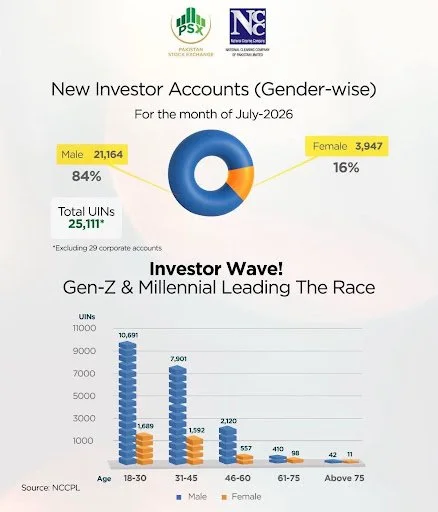
In Pakistan, out of these 500k current account holders, 50% of the accounts were opened in the last 2 years alone, and the majority were in the age bracket of 20-28 years old (Gen Z). That’s a trend that shows the new generation is more inclined towards investing in equities, which is a great move for them, as the PSX has historically delivered double-digit annual returns, far better than other local asset classes.
To show how undervalued their public market is, in Pakistan, the real estate value of just one housing development called DHA Karachi is estimated at around $90 billion. That is higher than the entire market capitalization of the Pakistan Stock Exchange, which sits at roughly $68 billion. The country does not lack capital. What it has lacked is the conviction, financial education, and willingness to put that capital into public equities.
Pakistan has recently seen many initiatives taken by influencers to educate everyone about investing in public equities, and how the 8th wonder of the world “compounding” actually works. You will find many influencers gaining a lot of popularity among young audiences, which bodes well for a market that is still very small in market-cap terms. It’s beginning to act like fuel to a rocket ship.
Barriers Are Falling Fast
Another aspect that is fueling this growth of new accounts is reduced barriers to entry. It used to take 1-2 weeks to open up an account, requiring a person to physically go to the broker, sign about 40 pages of documents, and then they could get the account opened. Now it takes hardly 2 days to open an account, without the need to visit a broker.
Digital access is a major catalyst. Smartphone share of mobile devices in Pakistan has already reached 71.6%, broadband users have crossed 161 million, and internet penetration is rising quickly. As more people move onto smartphones and reliable mobile data, the friction of opening and managing a brokerage account keeps falling.
The same digital shift that helped accelerate retail investing in other emerging markets is happening in Pakistan. Additionally, Meezan Bank and HBL now offer different ETFs and Mutual Funds within their banking apps, creating easier access and contributing to the surge of new investors.
Growth of Emerging Markets
Emerging markets in general look well-positioned for the coming decades, with many economies still delivering 5–7% GDP growth. Pakistan is near the top of the mix with a relatively young and expanding population. At the same time, financial literacy is improving, and more people are beginning to invest their savings in equities to compound wealth for the long term. This shift is an important trend to watch and should support deeper capital markets across the region.
Pakistan’s stock market has already shown what is possible. Over just the past 2.5 years, the PSX delivered more than 300% returns while the dollar remained relatively stable. Meaning a foreign investor would have earned 3x in real USD terms, even outperforming the Nasdaq during its own exceptional run.
Generational Shift in Mindset
Financial illiteracy among the older generation limited the growth of Pakistan’s stock market for decades, but that is starting to change.
Baby Boomers in Pakistan preferred investing in real estate, gold or cars, assets that are still widely viewed as stores of value, even though cars are considered depreciating assets almost everywhere else.
Baby Boomers often see investing in stocks as risky or dismiss it as Satta (gambling). While some stocks are speculative and should be avoided, just as in any market, dismissing the entire equity market as gambling is an overstatement.
But the young generation is changing this perception. They are coming forward in numbers not seen before. The roughly 100% growth in new retail investors over the past three years is a milestone worth noting.
China’s Influence
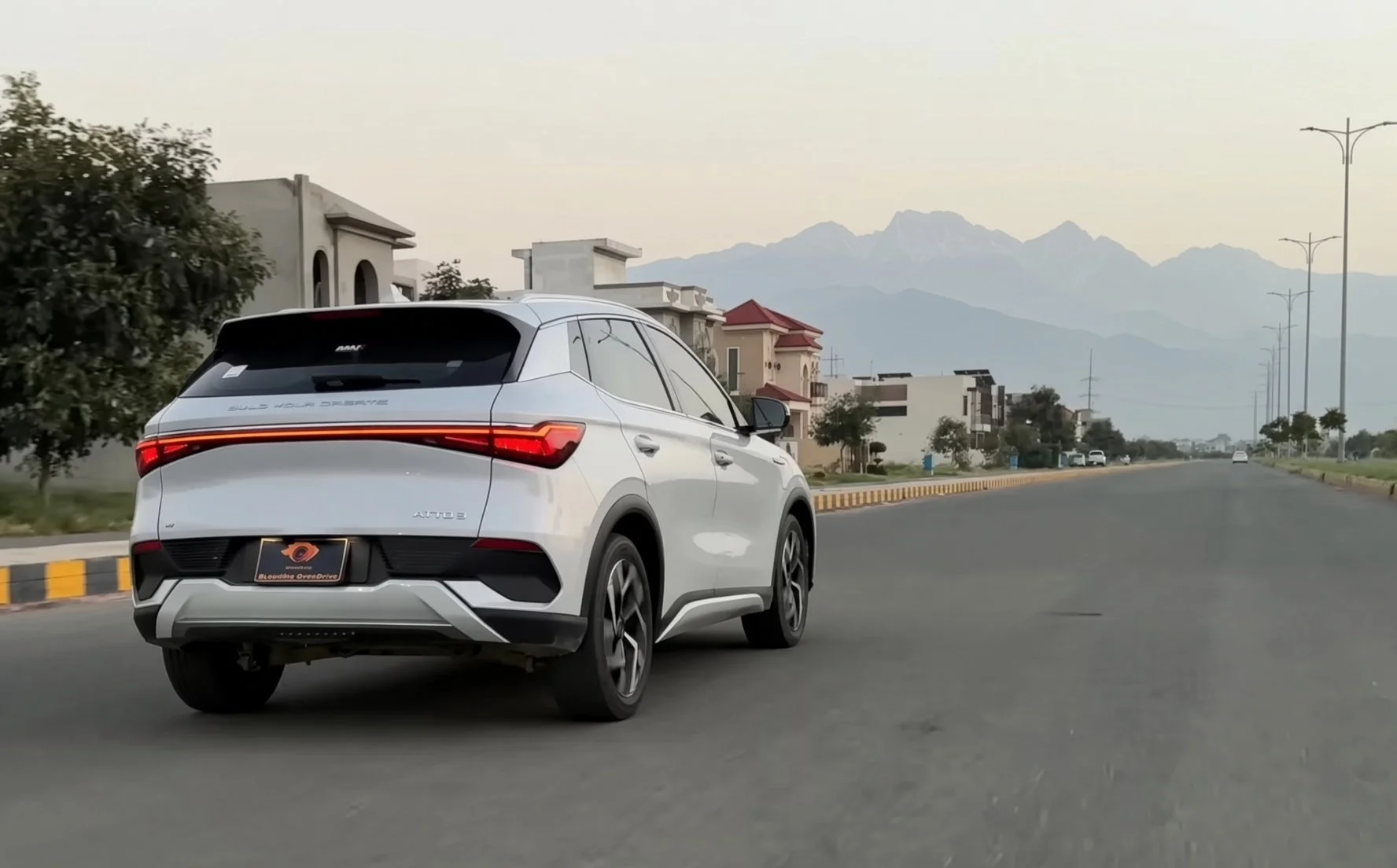
China is also playing a large role in recent gains as China is a direct shareholder of 40% of the PSX. China continues to invest heavily in Pakistan's infrastructure through CPEC and also contributes to the Auto Industry by partnering with Local Auto companies and establishing production and assembly factories.
These partnerships have brought more competitive pricing into the market. Auto Companies have been forced to cut prices to stay competitive, and consumers are ultimately benefiting.
In Pakistan, out of 1000 people, only 11 people own cars; in India, it is 35. In the developed world, it is close to 700. In the US, it's 850, so room for growth is there; even compared to peers, there is a 2–3x growth potential, and China clearly sees the opportunity.
Sazgar, a multi-bagger that delivered roughly 250x returns over the past decade, partnered with China's automaker Haval and has not looked back. A share that was trading at just 9 rupees in 2016 is now trading around 1,980 and made an all-time high at 2,400, which is almost a 300x move in a decade.
Manufacturing Is Recovering
Pakistan’s manufacturing sector is recovering from a period of weak growth. Overall industrial output rose 6.6% this year, up from just 2.0% the previous year.
Sixteen out of 22 major industrial groups recorded positive growth. This turnaround has been driven by the Large-Scale Manufacturing (LSM) sector, which rebounded with a 6.1 percent expansion fueled by massive surges in key verticals like automobiles, which jumped by over 61 percent, as well as petroleum products, food processing, and apparel.
The Special Investment Facilitation Council (SIFC) has also helped by streamlining investor processes and improving the overall business environment for industry.
Furthermore, a stabilizing domestic economy, marked by easing inflation and lower interest rates, has significantly reduced historically very high borrowing costs. Combined with Pakistan’s engineering talent and competitive labor pool, these favorable macroeconomic developments are effectively positioning the country to further enhance its local production, create high-skilled employment, and improve its overall export competitiveness on the global stage.
Fundamentally, PSX is a strong contender to deliver better returns than many developed markets over the coming decade. Dividend yields on some solid companies not only beat inflation by a wide margin but also offer growing income streams, making them attractive for retirement accounts.
Some of the examples include Hubco (average dividend yield of ~12% over the past decade) and Engro Fertilizer (~13% average dividend yield over the past decade).
The Risks Are Real
Now to the dark side of the beast: debt remains a major concern. A country that is import-oriented must continually secure financing to cover its obligations. Limited political stability further weakens the outlook.
Currently, the debt-to-GDP ratio sits at around 70%, which is not especially high compared with the US, which is above 100%. But the problem is that Pakistan's trade deficit continues to widen every year.
Rising crude oil prices, which Pakistan imports, put significant pressure on foreign exchange reserves. On the positive side, Pakistan has a defence pact with Saudi Arabia, a major oil producer that could provide support in times of need.
Still, Pakistan must find a way to improve its exports, introduce policies that promote ease of doing business, and lower its debt burden, as only the interest payments alone are taking around 40% of the yearly budget and continue to rise, an alarming trend.
Stocks to Watch
Some stocks worth watching include Hubco, which is partnered with BYD and currently trades at a P/E of 7. Lucky Cement, which is partnered with Kia and is a major player in the cement industry, could benefit if real estate activity picks up as taxes ease. Interloop, a textile company that supplies Adidas and Nike, is not heavily energy-dependent and runs on its own solar power.
Prema, a well-known milk producer in Pakistan, is also expanding into water and poultry eggs.
Potential Buying Opportunity
The Pakistan stock market may stay weak or range-bound due to these factors for a while. Frustration will build, weaker hands will sell, and prices could get even more attractive. That is often when the best opportunities appear. The market currently trades at a P/E of around 9.3, already low compared with many peers. Historically, it has been considered cheap closer to the 5–7 range. Any further market weakness would simply put solid companies on sale.
The long-term case remains intact: a young and growing population, improving financial literacy, competitive labor and engineering talent, and a group of real businesses that can compound over time. Temporary economic pressure and soft prices could be the setup for long-term value investing in this emerging market, home to the world’s 5th largest population.
Takeaways
1. Pakistan’s stock market is still tiny and under-owned. Put it on your radar as a long-term emerging-market opportunity rather than waiting for it to become obvious.
2. The market already trades at a relatively low valuation. If prices soften further, quality companies could become attractive for patient capital.
3. Focus on a few clear themes: domestic consumption, manufacturing recovery, and Chinese partnerships.