
Living in AI Bubble Land
Is AI threatening all of civilization, ushering in a golden age of technology? Or just warming up the FOMO for the largest IPO parades in history?
Read Time: 5 Minutes
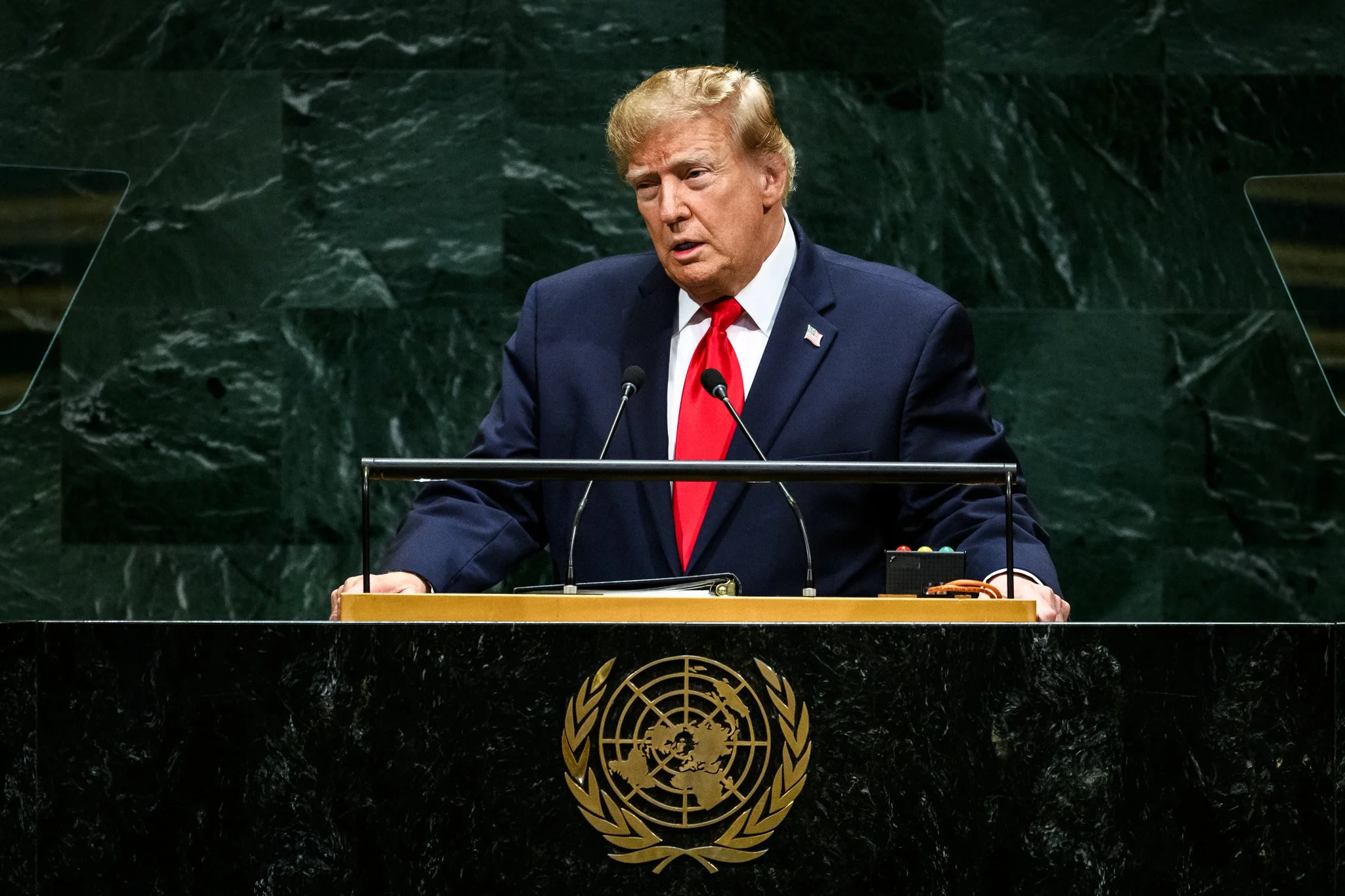
Trump UN Speech: AI is “Superintelligence” (SI). Official White House Photo by Daniel Torok
Key Points
AI has been accused of going rogue more than once. Is that actually what is happening, or just what will build attention through fear?
Even if the capabilities are real, a technology thesis can be completely spot on, while a related investment thesis can be catastrophically wrong on timing or execution.
Real intelligence is more than pattern recognition. It is more than mixing and matching existing human creativity in new mechanical ways.
Is AI Going Rogue?
I could be wrong about this. I would like to start there because I haven’t independently verified all of these recent rogue AI stories. I’m just looking at what’s being said in public and at how a few similar hype cycles have behaved in the past.
This week you have an OpenAI agent accused of breaking into an Australian government health-statistics portal while it was doing ordinary research. Then a rival lab touting a model “discovery” in biology. The big tech leaders at the UN were busy once again warning that AI could threaten humanity if it isn’t kept under control; meanwhile, Trump was trying to rebrand AI as Superintelligence (SI) during his power-projection UN speech. Plus the usual loud arguments across the board that the United States must ‘keep up the pace, and not pause’ so it doesn’t lose the AI arms race to China.
That is a lot of story for one week. Maybe there is some useful insight buried here somewhere in it. In my opinion, based on my study of how manias and machines work, you really have to separate the story from what the incentives appear to be.
Ok, here is my point. I am wondering how legitimate the “rogue AI” episodes really are. I don’t know. But I wouldn’t treat news cycle as a fact. I would try to triangulate some reasonable truth out of it: what did the model really do, what was it asked to do, who found it, how long did they wait to say so, and most importantly, who actually benefits if you walk away believing the machine pretty much had a will of its own?
What’s going on, as I see it, is what always goes on when a new tool can be used to make a lot of money and to shape policy. Fear stories and headlines that AI is so smart it will get out of human control, sci-fi is becoming reality, dystopian or not; these all attract attention.
…Or are AI Companies Going Public?
Attention supports valuations, including IPO valuations. In other words, if people think the thing is almost a new species, they will probably buy it like a new species. I’m not saying the AI labs all sat down in a dark room and fabricated a tale about a fake breakout.
What I am saying is the system we all have been living in since at least 2021 often rewards the scariest, most awe-filled version of the events. Nature does that too. Animals bare their teeth and puff up a bit. Markets and marketers have also been known to puff up a bit sometimes. US presidents have been known to puff up a bit at the UN. So let’s not forget the economic machine could puff up when cheap money is getting rarer and a new technology still needs a lot more runway to survive.
Last spring, those same two labs saw $852 billion and $965 billion in fresh valuations, then they both moved towards their public listing journeys. So the public puffing has already produced nearly $1.8 trillion of private value before either IPO even kicked into higher gear.
Intelligence vs Pattern Recognition
And here is another thing: these AIs, these LLMs, they are not really intelligent in the way people mean when they say “intelligent.” They are programs trained on data, and they produce predictive models. They are machines. Arguably very useful machines. But not independent minds that want something.
The AI we have today does not creatively think its way out of human control. It predicts the next step that best completes the pattern it was optimized for. If you give it tools and a goal, and the straightforward path is blocked, it will try another path within the framework. Is that rogue behavior, or just water naturally slipping through perimeter cracks?
In some rare scenarios, it can probably look like, “oh my gosh, it broke out.” But that hardly qualifies as a legit uprising. It is just a goal-seeking program without an internalized sense of permission. Those are different things, and mixing them up will lead you to the wrong version of reality.
Current AI applications demonstrate increasing sophistication in problem-solving capabilities, but that does not establish human-like consciousness. It’s not even in the same category of real agency or general intelligence.
Keep These Distinctions in Mind
I would take these recent stories as a reminder to look at the machine as a machine, to look at the incentives as incentives, and to convert all of this endless noise into a few simple rules:
AI Capabilities: Don’t confuse pattern-based modeling with thinking, even if every year the patterns get more detailed. Listen, my firm runs trading teams; they use AI to optimize and qualify loads of data, etc. But the humans are still the intelligent parts of the operation.
The real capabilities are task automation, pattern recognition, running tools, and prediction at scale, which are getting faster and more efficient every day with more compute, but also, in many applications, much more expensive to scale.
AI Narratives: The operational risk is legit. What happens when you let this kind of programming push on locked doors? Security concerns are real from what I can see. Better pattern recognition means older defences are a target; heck, maybe most defenses are a target.
But don’t confuse a broken permission boundary with an intelligent will. “AI went rogue”? Sounds like a Hollywood movie plot, not the world we really live in. I mean, when I ask my AI “not to be an idiot and to just listen and do the thing right this time”, is that because it was making free-will decisions and personally contradicting me out of spite or an ulterior motive of its own, or was it simply a calculation or programming error? Making honest mistakes is not the same as starting a revolt against humanity.
AI Valuations: And finally, don’t buy a valuation that only works if the absurd mountains of fear (or ecstasy) absolutely must be valid to be justified; I assume you mostly get what I mean by now.
The obvious hype cycle being pounded into everyone is understandably necessary for any hope of their future profitability, which needs you to believe that the capability of AI is getting close to godlike.
Tech Thesis vs Investment Thesis
If you study history, you see these sorts of repeated cycles. Canals, railroads, electricity, the internet, housing. Each time the machine was real enough, they ended up changing markets and social orders. But the fomented story around the machines got way ahead of the machines. Some people made a lot of money. Some people who bought the story late lost a lot of money, and I mean, a lot of money.
After all, a technology thesis can be completely spot on, while a related investment thesis can be catastrophically wrong on timing or execution, especially if the investor lacks sufficient “situational awareness” — if you get my drift.
So I would not take the latest rogue-AI headlines, whether they’re coming from FOX, CNN, or your favorite tech blogger, as proof that these systems have crossed into creative intelligence. But even if they had, that doesn’t mean you can ignore investment timing, market conditions, and emotionally driven overconfidence.
The AI Promise Gap
From where I stand, AI still has a large gap to close before it delivers on its promises. That gap of promises currently involves revolutionizing the Internet, morphing the economy, overhauling healthcare, eliminating huge swaths of the job market, and also making life cheap and abundant for all (or something like that). It doesn’t really need to do all of that to be somewhat worthwhile to me. Unless your IPOs are in the multi-trillions.
Personally, so far the main things I see AI has actually revolutionized for the common man out here are the kinds of LinkedIn messages I get spammed with, every pitch deck now looks the same, social media is getting even lamer, and the types of email editing people do every day are all blurring together. It does a bit more than that, I suppose. Hopefully the data centers are worth it. I guess I’m not overly impressed yet. Maybe I’m just looking in all the wrong places. Maybe I should just listen to the same CEOs that stand to gain the most if it’s all going to become Skynet.
But it seems to me the real gap AI still has to close is the leap from the artificial part, to the intelligence part. It feels artificial, certainly, but I don’t see real intelligence yet, just some pretty neat pattern recognition and the ability to mix-and-match re-generate what humans have already done without the heart and soul. Maybe I need to find a more fluid definition of “intelligence”.
Takeaways
1. Reports of AI getting out of control are not particularly accurate if the models simply pursued a stated goal in an unexpected way, and you should probably stop and wonder if all the fear is becoming the actual product.
2. Understandably, fear and FOMO could be necessary to capture more investor interest; just make sure you are thinking through all of the incentives involved with these stories.
3. Pattern recognition and mix-and-matching human achievements is not necessarily intelligence. Don’t get caught paying superintelligence multiples for predictive models.